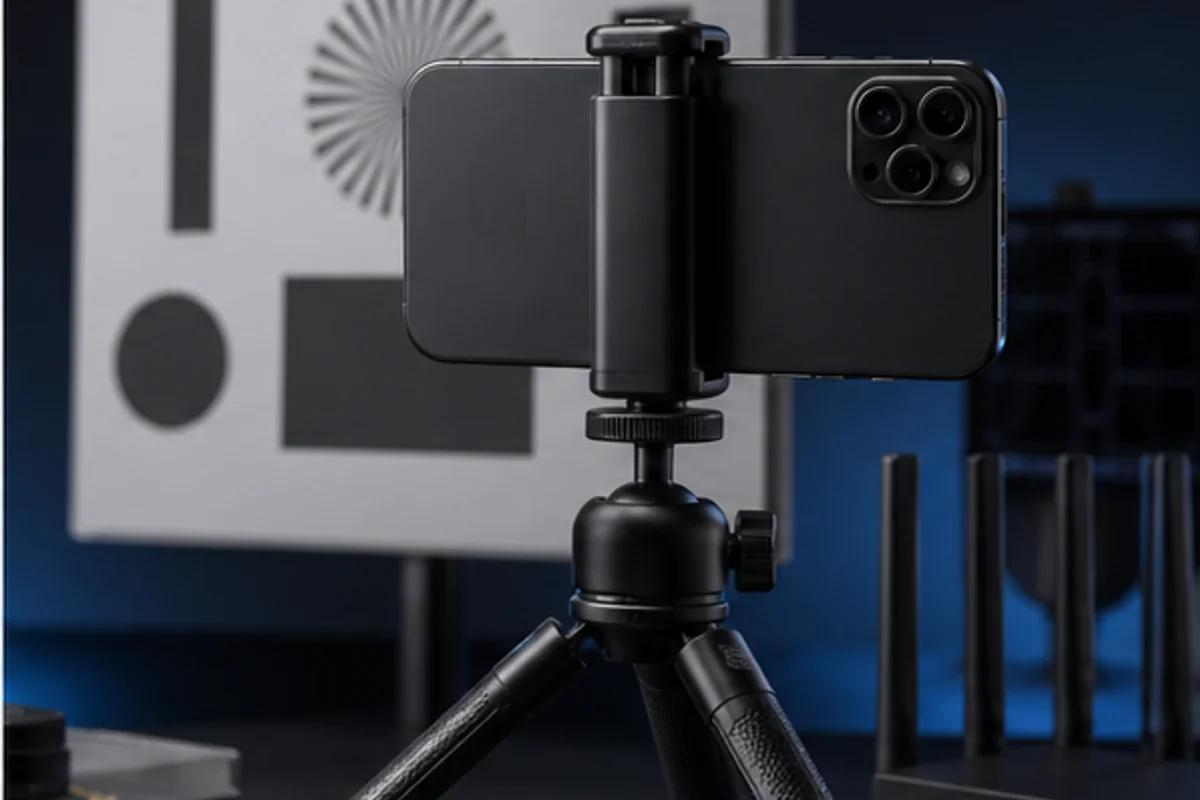
Travel combines fast-changing light, unreliable networks, limited charging and higher loss risk. A useful mobile setup is a workflow for capture, connection and recovery, not just a camera ranking. GearPilotia uses an evidence-first decision framework: no paid placement, no invented laboratory result and no external commercial link. The purpose is to help a reader reproduce a careful comparison with the equipment, region and workload that actually matter.
Start with the real job, not the product label
Describe the destinations, operators, expected subjects, daily media volume, navigation dependence and backup opportunities before selecting the device and plan. Separate requirements from preferences and write an acceptable fallback for every essential function. A decision brief should name who uses the setup, where it runs, how often the demanding task occurs, what existing equipment must remain compatible and what failure would interrupt important work.
Use a small set of representative tasks rather than an artificial list of every possibility. Complete each task from start to finish, including connection, file movement, account access, sleep and wake, charging and recovery. A component can be individually fast yet create a slower system when an adapter, application or thermal limit interrupts the workflow.
Build an evidence sheet before comparing
For every candidate, record the exact model and regional variant, firmware or software version, configuration, test date, power mode, connected accessories and ambient conditions. Distinguish manufacturer specifications, independent measurements and your own observations. They answer different questions and should never be blended into one unexplained score.
Specifications establish advertised capability, not successful operation in every system. Independent measurements are useful when the method, sample and settings are disclosed. A personal trial proves how one setup behaves in its intended context. When evidence conflicts, retain the conflict and identify the next test rather than choosing the most convenient result.
Criteria that change this decision
Camera consistency
Compare start time, focus, motion handling, low-light behaviour and colour across the lenses actually used. A single ideal sample does not show how reliably the camera captures a brief moment. Record the conditions, configuration and observation rather than reducing this point to a badge. Repeat the check after the system has warmed up or the connection has changed whenever that state affects the result.
Network compatibility
Check destination bands, voice support, roaming, physical SIM and eSIM behaviour with the intended operator. A model name can cover regional radio variants. Record the conditions, configuration and observation rather than reducing this point to a badge. Repeat the check after the system has warmed up or the connection has changed whenever that state affects the result.
Offline readiness
Download maps, tickets, translations and essential contacts, then test them without a network. Connectivity quality includes the ability to continue safely when service disappears. Record the conditions, configuration and observation rather than reducing this point to a badge. Repeat the check after the system has warmed up or the connection has changed whenever that state affects the result.
Power and storage
Estimate daily photo, video, navigation and hotspot demand. Plan charging, free storage and a transfer path that does not depend on one fragile connector or account. Record the conditions, configuration and observation rather than reducing this point to a badge. Repeat the check after the system has warmed up or the connection has changed whenever that state affects the result.
Backup and loss recovery
Use encrypted screen protection, account recovery, device location and at least one independent copy of important media. Confirm that recovery codes remain accessible without the lost phone. Record the conditions, configuration and observation rather than reducing this point to a badge. Repeat the check after the system has warmed up or the connection has changed whenever that state affects the result.
Run a repeatable three-stage check
First, verify the normal path. Begin from a cold, known state and complete the main task at the intended quality, power and connection settings. Note setup time, interruptions, noise, heat, responsiveness and the result produced. Avoid changing several controls simultaneously because the cause of an improvement or failure then becomes unclear.
Second, test the sustained or awkward state. Continue long enough for temperature, battery, memory pressure or network behaviour to stabilise. Reconnect an accessory, wake from sleep, switch users or move to weaker wireless coverage when those events are realistic. Technology that performs well only immediately after restart is not yet a reliable workflow.
Third, prove recovery. Document how to restore the system after a failed connection, empty battery, application crash, interrupted update or lost account session. Recovery should be understandable to the real user and should not depend on an undocumented sequence remembered by one person.
Compare complete systems at equivalent settings
Use the same workload, source material, output target and measurement window. Match display resolution, sound level, network, image-quality features and power policy where they affect the outcome. If equivalent settings are impossible, explain the difference and compare the user-visible result instead of pretending the numbers are directly interchangeable.
Warm up equipment when thermal state matters, repeat variable tests and report a range rather than false precision. One exceptional run is not representative. At the same time, do not call documentary analysis a laboratory test. GearPilotia publishes a method and decision record unless calibrated measurement under a disclosed protocol has actually taken place.
Include compatibility, privacy and accessibility
Compatibility extends beyond the connector. Confirm protocol, operating-system support, drivers, account rules, power, bandwidth, regional variant and the behaviour of every required adapter. Test keyboard operation, readable text, captions or audio controls, colour-independent status and the needs of the actual user. An inaccessible control is a functional incompatibility.
Connected technology can expose location, voice, media, household presence and account relationships. Review permissions, indicators, local control, cloud dependence, deletion, guest access and recovery. Use a dedicated test profile where possible and never publish serial numbers, network identifiers, private recordings or credentials as supporting evidence.
Model the full ownership cost
Calculate the device, required accessories, cables, adapters, subscriptions, energy, replacement wear parts and realistic service over the planned life. Include the cost of an incompatible purchase, downtime and a credible return. A slightly higher initial price can be rational when it removes a fragile adapter chain or provides a repair path; a premium label alone is not evidence of value.
Check warranty territory, update horizon, battery or consumable replacement, spare parts, documentation, data export and end-of-life reset. A useful product remains maintainable after launch reviews disappear. Treat promised future features as absent until they are delivered and independently verified.
Signals that require stronger proof
- A regional device variant lacks required network support. Pause the shortlist until the missing capability, constraint or recovery path is documented.
- The workflow has no offline path. Pause the shortlist until the missing capability, constraint or recovery path is documented.
- All images and account recovery depend on the same phone. Pause the shortlist until the missing capability, constraint or recovery path is documented.
A risk signal is not a verdict. It raises the evidence required before purchase. Ask a precise question, keep the answer with its date and model, and remove the candidate when an essential dependency remains unknown. A shorter defensible shortlist is more useful than a crowded ranking.
Finish with a decision record
- State the real tasks, environment and non-negotiable constraints.
- Remove candidates that fail compatibility, safety, accessibility or support.
- Compare the remaining complete systems at equivalent settings.
- Repeat the sustained check and prove the recovery path.
- Record the chosen trade-off, remaining limitation and review date.
The final explanation should fit in a few sentences: this setup completes the required work, the evidence was gathered under these conditions, this compromise was accepted, and this recovery path remains available. That statement is more durable than a generic score because it can be reviewed when software, prices or needs change.